


Optical Filters
- Cylindrical Lenses
- Aspheric Lenses
- Achromatic Lenses
- Spherical Lenses
- Optical Prisms
- Optical Mirrors
- Beamsplitters
- Optical Windows
- Infrared Optics
- Micro Optics
- Optical Filters
- Colored Glass Filters
- Custom Shapes
- Laser Optics
- Freeform Optics
- Fresnel Lenses
- Light Pipe Homogenizing Rods
- TIR Lens
- Medical Device Optics
Optical Filters
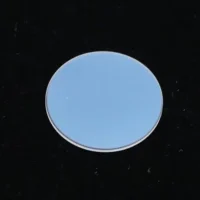
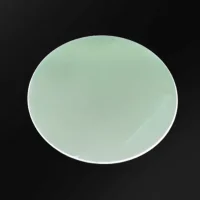
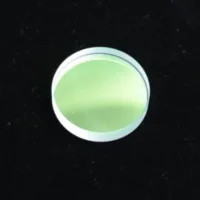
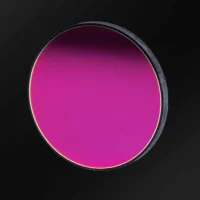
Shanghai Optics supplies stock and custom optical filters for precision imaging, laser, biomedical, analytical, sensing and instrumentation systems. Our portfolio includes bandpass, narrow bandpass, longpass, shortpass, dichroic, fluorescence, Raman, laser line, notch, neutral density, coloured glass and UV filters.
For custom requirements, filter performance can be specified around wavelength, bandwidth, transmission, blocking optical density, angle of incidence, substrate, coating, dimensions and operating environment. Our optical engineers support requirements from prototype and R&D quantities through production.
Optical Filter Technologies
Different optical filter technologies provide different combinations of spectral performance, blocking, transmission and environmental stability. Shanghai Optics supports multiple filter technologies to meet different optical system requirements.
Hard-Coated Interference Filters
Shanghai Optics manufactures hard-coated interference filters using dense dielectric thin-film coatings for applications requiring high transmission, strong out-of-band blocking and stable spectral performance.
IBS coating technology enables precise control of multilayer dielectric coatings and supports bandpass, edge, notch, fluorescence, laser and other wavelength-selective filter designs.
Hard coatings are applied directly to the optical substrate without adhesive layers, providing a compact and durable construction for demanding optical systems.
Dichroic Filters
Dichroic filters provide wavelength-selective transmission and reflection through multilayer dielectric coatings. Designs can be specified around required transition wavelengths, transmission and reflection bands, angle of incidence and system geometry.
Absorptive Filter Glass
Absorptive filter glass controls spectral transmission through the optical material itself. Performance depends on the glass composition and thickness, making it suitable for applications requiring broadband attenuation or spectral selection.
Stock & Custom Optical Filters
Shanghai Optics supplies both stock and custom optical filters for R&D, prototyping, precision instrumentation, imaging and OEM applications. Choose from standard stock filters for readily available specifications, or work with our optical engineers on a custom filter tailored to your spectral and system requirements.

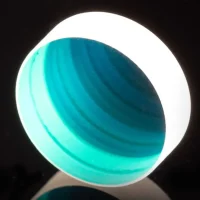
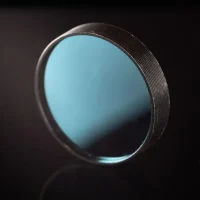
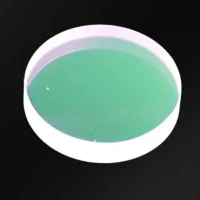
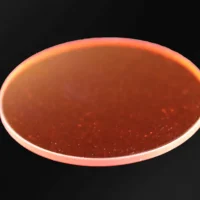
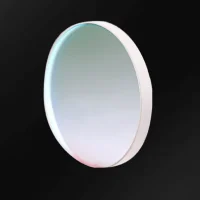
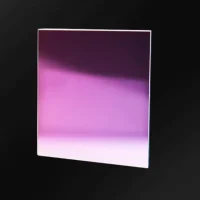
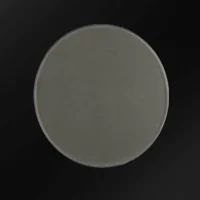
Types Of Optical Filters
Engineering Specifications for Optical Filters
Filter selection depends on both spectral performance and how the filter will operate within the optical system. Key specifications include:
| Specification | Engineering Consideration |
| Centre Wavelength (CWL) | Define the nominal wavelength and required tolerance. |
| FWHM / Bandwidth | Determines the transmitted spectral range for a bandpass filter. |
| Peak Transmission | Important for systems where signal throughput is critical. |
| Optical Density (OD) | Defines the required blocking level over specified wavelengths. |
| Cut-on / Cut-off | Defines the transition wavelength for longpass and shortpass filters. |
| Edge Steepness | Important when transmitted and rejected wavelengths are closely spaced. |
| Angle of Incidence (AOI) | Spectral performance can shift with AOI and should be considered during system integration. |
| Substrate | Selected according to spectral, thermal, mechanical and environmental requirements. |
| Clear Aperture | Defines the usable optical area of the filter. |
| Surface Quality / Flatness | Important for filters positioned within imaging or wavefront-sensitive optical paths. |
Need help defining a filter specification? Talk to Our Optical Engineers →
Optical Filter Applications
Biomedical & Medical Instruments
Fluorescence imaging, microscopy, diagnostic instrumentation, biomedical detection and medical laser systems.
Analytical & Scientific Instruments
Raman spectroscopy, spectroscopy, chemical detection, laboratory instrumentation and optical measurement systems.
Machine Vision & Imaging
Spectral isolation, contrast enhancement, illumination control and sensor optimisation.
Laser Systems
Laser-line isolation, excitation and emission separation, wavelength suppression and spectral control.
R&D & Prototyping
Stock filters for rapid system development and testing, with custom options for specialised experimental requirements.
OEM Devices & Instruments
Custom optical filters manufactured around defined spectral, dimensional and environmental requirements for integration into production systems.
What to Provide for a Custom Optical Filter
Have a custom requirement? Providing the following information can help our optical engineers evaluate your application:
- Transmission wavelength range
- Blocking wavelength range
- Centre wavelength, cut-on or cut-off wavelength
- FWHM / bandwidth
- Minimum peak transmission
- Required optical density
- Angle of incidence
- Substrate requirements
- Dimensions and clear aperture
- Surface quality / flatness, if applicable
- Operating environment
- Required quantity
- Target spectral curve or drawing, if available
Have a spectral curve or drawing? Send it to our optical engineering team for review.
Frequently Asked Questions
Key specifications include the transmission and blocking wavelength ranges, center wavelength (CWL) or edge position, bandwidth/FWHM, minimum transmission, blocking optical density (OD), angle of incidence (AOI), polarization, substrate, clear aperture, and dimensional requirements. Environmental conditions and system-level performance requirements should also be defined where applicable.
Changing the angle of incidence can shift the spectral response of an interference filter and may also affect bandwidth and polarization-dependent performance. For systems operating away from normal incidence, specify the nominal AOI, allowable angular range, and polarization state so the coating can be evaluated under the actual operating conditions.
Required blocking OD should be determined from the unwanted signal level, detector sensitivity, system signal-to-noise requirements, and spectral range over which blocking is required. Specifying OD without the associated blocking wavelength range can lead to unnecessary coating complexity or insufficient system performance.
Narrow bandwidths, steep spectral transitions, high transmission, and deep out-of-band blocking can increase coating complexity and sensitivity to manufacturing tolerances. These requirements should be evaluated together rather than independently, particularly for narrowband, fluorescence, Raman, and other demanding spectral applications.
A custom filter is appropriate when available filters cannot meet the required spectral range, CWL, bandwidth, blocking OD, AOI, polarization, substrate, dimensions, environmental requirements, or system-level performance. Customization can also be valuable when the filter must be optimized around a specific source and detector combination.
Substrate selection should consider spectral transmission, refractive index, thermal properties, environmental durability, surface quality, and coating compatibility. The coating design should then be optimized around the required spectral response, AOI, polarization, and operating environment.
Yes. Custom optical filters can be developed around the source spectrum, detector response, optical geometry, AOI, mechanical envelope, and environmental requirements of an OEM instrument. Considering these parameters at the system level can help avoid unnecessarily restrictive specifications while maintaining required optical performance.
For an efficient engineering review, provide the target transmission and blocking ranges, CWL or edge wavelength, bandwidth/FWHM, minimum transmission, required OD and blocking range, AOI, polarization, substrate, clear aperture, dimensions, quantity, and environmental requirements. A target spectral curve, optical drawing, or existing filter specification should also be provided when available.
Discuss Your Optical Filter Requirements
Whether you need a standard stock filter or a custom filter for a precision optical system, our team can help evaluate your spectral and system requirements.
Need help?
We offer consultations and initial feasibility studies. If you have questions about limitations or lens capabilities we’re more than happy to work through your proposed custom components. As an unmatched custom optical provider, we’ll do everything that we can bring your vision to life.


