


Understanding Optical Waveplates: Manipulating Polarization with Precision
Precision Control of Polarized Light with Optical Waveplates
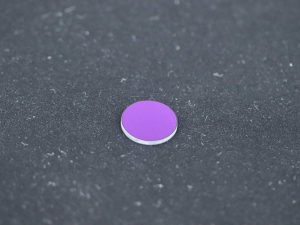
In the realm of modern optics, controlling light’s polarization is fundamental for applications ranging from laser systems to quantum devices. Optical waveplates—also known as retarders—are passive optical components specifically engineered to modify the polarization state of light without altering its intensity, path, or coherence. These elements rely on birefringence, a property of anisotropic materials that introduces a controlled phase delay between orthogonal polarization components of an incoming wave.
How Waveplates Work: Phase Shift and Polarization
When linearly polarized light enters a waveplate, the material’s birefringent structure splits the wave into two components aligned with the fast axis and slow axis. These components travel at different speeds, resulting in a phase shift known as retardation. This shift is typically defined in terms of wavelength (λ), degrees, or nanometers.- Quarter-wave plates (λ/4) convert linear polarization into circular or elliptical polarization.
- Half-wave plates (λ/2) rotate the plane of linear polarization to a desired angle.
Material Matters: Choosing the Right Crystal
Waveplates are commonly fabricated from crystalline materials such as quartz, magnesium fluoride (MgF₂), calcite, and sapphire, selected for their high transmission, low absorption, and precisely defined birefringent properties. Quartz remains the industry standard due to its excellent optical clarity and mechanical durability.
Types of Waveplates and Their Use Cases
Waveplates are categorized based on how they achieve the target phase delay. Here’s a quick breakdown:- Multiple-Order Waveplates: Economical and thicker, but more sensitive to wavelength and temperature variations.
- True Zero-Order Waveplates: Thin, high-precision plates bonded to substrates to stabilize performance across a narrow bandwidth.
- Glued Zero-Order Waveplates: Composite plates that cancel high-order retardation, offering better thermal stability than multiple-order types.
- Achromatic Waveplates: Combine two materials to maintain consistent retardation across broad spectral ranges—ideal for tunable lasers and multispectral systems.
Applications Across Industries
Waveplates are critical components in systems that demand accurate control of light polarization. Common applications include:
- Optical Isolators: Combining a quarter-wave plate and polarizer to suppress back reflections in laser systems.
- Fiber Optic Communication: Maintaining signal integrity by managing polarization mode dispersion.
- Microscopy and Imaging: Enhancing contrast and reducing glare via circular polarizers.
- Quantum Photonics: Tuning the polarization states in entangled photon experiments.
- Laser Machining: Controlling beam shape and interaction with anisotropic materials.
In high-precision setups, even slight deviations in polarization can degrade performance. Some systems incorporate full-waveplates to correct ellipticity caused by reflective components or imperfect alignment.
Fine-Tuning for Optimal Polarization
Accurate waveplate alignment is critical. For instance, to generate circular polarization, the quarter-wave plate must be rotated 45° relative to the incoming linearly polarized light’s axis. Verification using a polarizer downstream helps confirm whether the resulting beam maintains constant intensity—an indicator of circular polarization.
Conclusion: Tailoring Light with Confidence
Optical waveplates provide scientists and engineers with a robust method for tailoring light’s polarization state, unlocking new potential in imaging, communications, metrology, and quantum research. With options ranging from cost-effective multiple-order waveplates to high-performance achromatic versions, selecting the right type and material is key to optimizing system performance.


